Why Art Therapy Helps When Words Cannot
Trauma lives in the body, and creative expression gives it a way out that talking alone sometimes cannot.
When something terrible happens, adults often expect a child to talk about it. Tell me what happened. Tell me how you feel. But trauma does not always live in the part of the mind that makes sentences. It lives in the body: in tight shoulders, in shallow breathing, in the stomach that clenches for no clear reason. A child who has been harmed may not have words for what happened, and may not be ready to find them. That is not a failure. It is how human beings are built.
What art therapy actually is
Art therapy is not an art class. Nobody is grading the drawing and nobody needs talent. It is a form of care led by a trained therapist, where making things becomes the way a person processes what they carry inside.
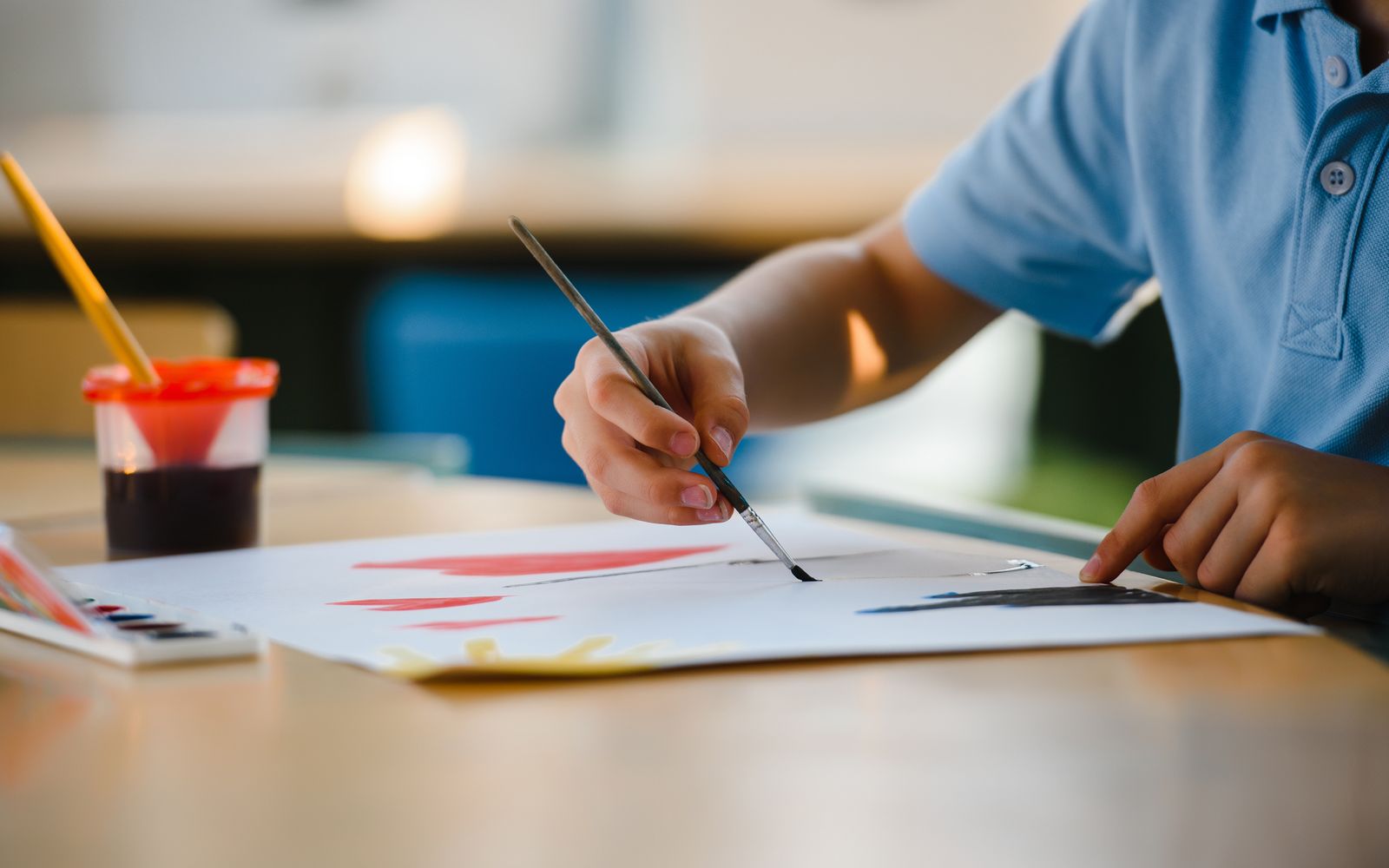
The materials are simple: paint, clay, paper, color. The rules are even simpler: there are none. A child can paint the feeling instead of naming it. They can tear paper, build something, destroy it, start over. The therapist is there to keep the space safe and to help the child notice what is happening inside as they work.
Expression as regulation
Here is the plain language version of why it works. When a person creates freely, the nervous system gets a chance to settle. The hands are busy. The breathing slows. The part of the brain that scans for danger quiets down because the body is doing something safe and absorbing.
Trauma keeps the nervous system stuck in alarm mode long after the danger has passed. Creative expression gives the body a different experience to practice: I am safe right now, I am in control of this, I can make something. Repeated over time, that practice teaches the nervous system a new default. That is regulation. Not a concept. A physical shift.
Creation as healing
There is a second part that matters just as much. Trauma takes away a person's sense of agency. Something was done to them that they did not choose. Making art reverses that direction. The child decides what to make, how to make it, when it is finished. Every choice is a small proof that they are the one in charge of their own hands again.
Over weeks and months, those small proofs add up. The art itself becomes a record of the journey: from chaos on the page to something more ordered, from dark colors to lighter ones, from images of being small to images of being strong. The child can see their own progress. Nobody has to explain it.
What this looks like in practice
A typical session is quiet and unhurried. The therapist might offer a prompt, or might simply set out materials and let the child begin. There is no homework and no performance. Parents are not in the room, but a good therapist keeps the family in the loop about how the work is going.
This is the second half of how we think about healing: heal the mind by educating the mind, and heal the body through art therapy. Learn first. Heal through expression. Connect to the people who help you do both.
Guided Healers Inc is building donor funded art therapy for women and children facing online harm, delivered by qualified therapists once our provider roster is in place. Families never handle money. Guided Healers Inc pays the therapist directly.
When online harm hits your family, you have someone to turn to and a path forward.
Learn more at guidedhealers.org.
Free family safety tips, once a month
Related reading
#ArtTherapy#MentalHealth#TraumaHealing#Healing#Wellness#Therapy#Childhood#Nonprofit